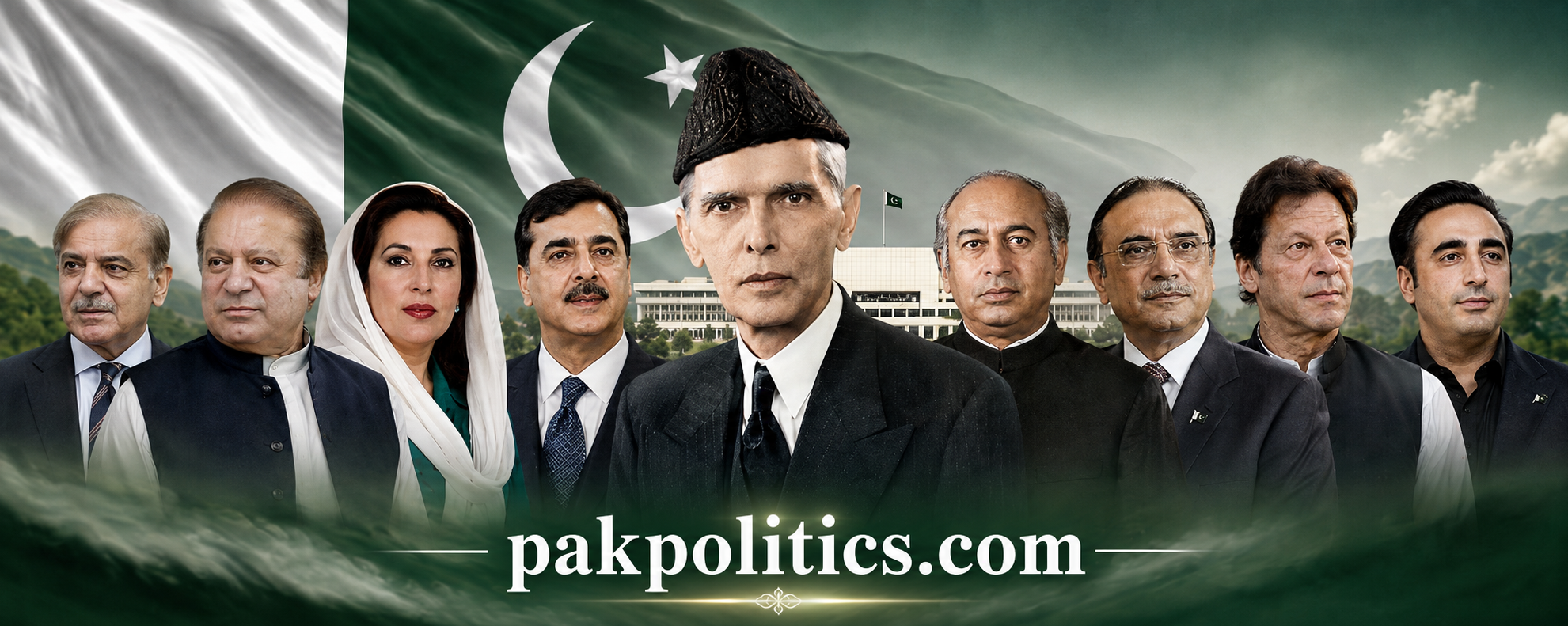
Editorial note: Biographical profile. Current offices and ongoing legal matters, where relevant, should be checked immediately before publication.
At a glance
| Life | 25 December 1876 – 11 September 1948 |
|---|---|
| Principal roles | Founder of Pakistan; first Governor-General of Pakistan; president of the All-India Muslim League. |
Overview
Muhammad Ali Jinnah led the All-India Muslim League during the decisive constitutional negotiations that resulted in the creation of Pakistan in 1947. Trained as a barrister, he developed from an advocate of Hindu–Muslim constitutional cooperation into the principal political spokesman for a separate Muslim homeland.
Political career
Jinnah’s politics emphasized constitutional method, representative safeguards and disciplined organization. The Lahore Resolution of 1940 gave formal direction to the Muslim League’s demand for independent states in Muslim-majority areas. The 1945–46 elections strengthened the League’s claim to speak for Muslim voters, and the failure of final power-sharing plans preceded partition.
Record and criticism
As Governor-General, Jinnah confronted refugee settlement, administrative division, financial pressure and conflict over Kashmir. His speeches are frequently quoted in modern political debate; responsible interpretation requires attention to date, audience and full context rather than isolated lines.
Political legacy
Jinnah remains Pakistan’s foundational national figure. Debates over his constitutional vision—federalism, minority citizenship, religion and the state, parliamentary institutions—continue to shape competing understandings of Pakistan.
Sources and further reading
Last reviewed: 22 July 2026. If you spot an error, please use our corrections process.